The 1000 Hour Salt Spray Test for Roofing Screws
Updated: Oct 1
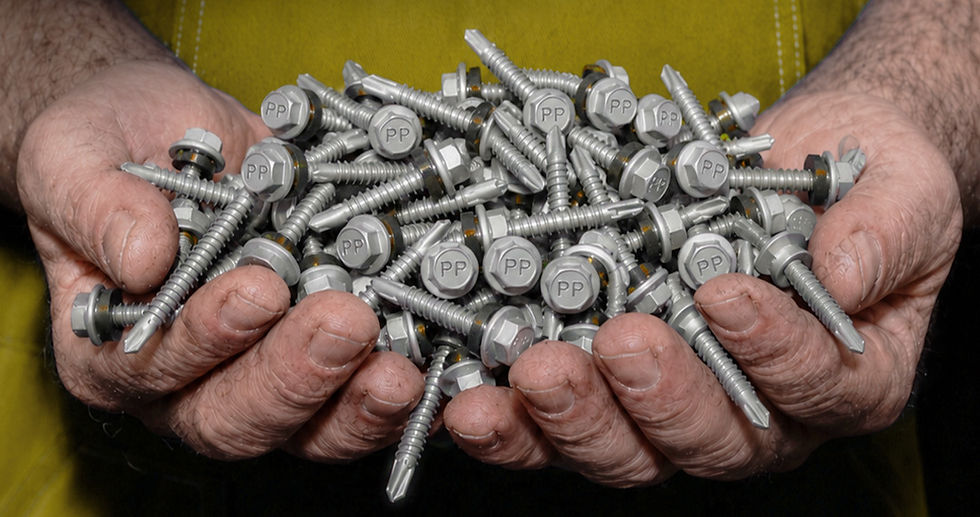
Self-drilling screws are essential fasteners in construction and manufacturing, prized for their ability to drill and secure materials without pre-drilling. But how do these screws hold up under prolonged stress and exposure? The 1000 hour test offers a clear answer by putting self-drilling screws through extended real-world conditions to evaluate their durability, corrosion resistance, and overall performance.
What Is the 1000 Hour Test?
The 1000 hour test is a standardized procedure used to assess the long-term reliability of fasteners like self-drilling screws. It typically involves exposing the screws to harsh environments—such as salt spray, moisture, or mechanical stress—for 1000 continuous hours. This simulates years of wear and tear in a compressed timeframe.
The goal is to observe how well the screws maintain their structural integrity, resist corrosion, and continue to hold materials firmly together. This test helps manufacturers and users understand if a particular screw type can withstand demanding conditions without failure.
Why Self-Drilling Screws Need This Test
Self-drilling screws combine drilling and fastening in one step, saving time and labor. They are widely used in metal roofing, HVAC installations, and steel framing. However, these screws often face tough environments:
Outdoor exposure to rain, salt, and temperature changes
Contact with metals that can cause galvanic corrosion
Constant mechanical vibrations or loads
Without proper testing, it’s hard to know if a screw will last or fail prematurely, risking structural damage or costly repairs.
Key Findings from the 1000 Hour Test
When self-drilling screws undergo the 1000 hour test, several important performance factors emerge:
Corrosion Resistance: Screws with high-quality coatings like zinc or epoxy show minimal rust after 1000 hours in salt spray chambers. Poorly coated screws develop significant corrosion, weakening their hold.
Thread Integrity: The threads must remain sharp and intact to maintain grip. The test reveals if threads wear down or strip under prolonged stress.
Drill Point Durability: The self-drilling tip must stay sharp enough to penetrate materials consistently. Dull tips reduce efficiency and may require pre-drilling.
Material Strength: Screws made from hardened steel or stainless steel maintain strength better than softer metals, which can bend or break.
For example, a batch of zinc-plated self-drilling screws tested in a coastal environment simulation showed less than 5% corrosion after 1000 hours, proving their suitability for seaside construction projects.
Practical Implications for Builders and Engineers
Understanding the results of the 1000 hour test helps professionals select the right screws for their projects. Here are some practical takeaways:
Choose screws with proven corrosion-resistant coatings for outdoor or humid environments.
Verify that the drill point design matches the materials you work with to avoid pre-drilling.
Consider stainless steel screws for high-strength and long-lasting applications.
Use test results as a benchmark when comparing different brands or types of self-drilling screws.
This knowledge reduces the risk of fastener failure, improves safety, and lowers maintenance costs over time.
Final Thoughts on the 1000 Hour Test
The 1000 hour test provides a reliable way to measure how self-drilling screws perform under extended stress and environmental exposure. It reveals which screws can truly stand the test of time and which may fall short. For anyone relying on these fasteners in critical construction or manufacturing tasks, paying attention to test results ensures better choices and stronger, longer-lasting assemblies.
Next time you select self-drilling screws, look for those backed by rigorous testing like the 1000 hour test. This simple step can save you headaches, repairs, and extra costs down the road.


Comments